
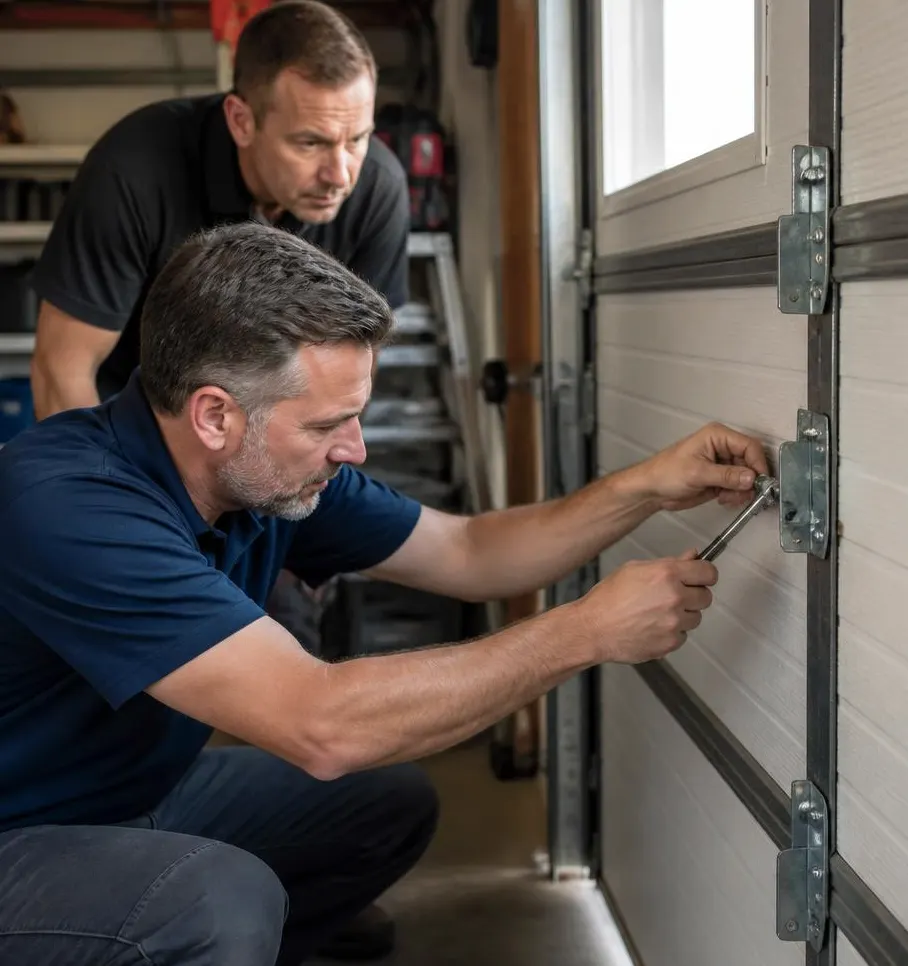
The Storm Knocks Out the Power, and Now You're Stuck
You're standing in your garage, keys in hand, and you hit the wall button or the remote out of habit. Nothing happens. The lights are out, the opener motor is silent, and your car is trapped behind a door that suddenly feels like a brick wall. This scenario plays out a lot around here once fall storms roll through and wind gusts knock the power out for an hour or an evening. The good news: almost every garage door with an automatic opener has a manual release built in for exactly this moment, and operating it safely is something most homeowners can do themselves.
Tools You'll Need
- A flashlight or headlamp (phone light works if the outage happens after dark)
- Work gloves, if you have them, for a better grip on the door and track
- A step stool, if your release cord is out of easy reach
- Nothing else — no special tools are required for the manual release itself
Step 1: Locate the Manual Release Cord
Look for a red cord with a handle hanging from the trolley on the track that runs along your garage ceiling, usually a foot or two in front of the opener motor. This is the emergency release. Some newer openers have a side-mounted release lever instead, often used when the opener is mounted off to the side rather than overhead. Either way, it's designed to disconnect the door from the motor so you can move it by hand.
Step 2: Make Sure the Door Is Fully Down Before You Pull the Release
If the door is already down when the power goes out, you're in a safer position. Pulling the release cord while the door is up lets gravity take over, and a heavy door can drop fast if the springs aren't balanced correctly. If the door is already closed, pull the release cord, and the trolley will disconnect with a noticeable click.
Step 3: Opening the Door Manually
- Pull the manual release cord straight down to disconnect the trolley from the opener arm.
- Grip the door by the bottom handle or the bottom panel, not the tracks or springs.
- Lift slowly and steadily, keeping the door moving evenly on both sides.
- If the door feels unusually heavy, stiff, or lopsided as you lift, stop. That's a sign of a spring problem, not something to force through.
- Once open, prop it in place if you need to leave it up for any length of time — most doors don't have a reliable manual hold, so use a clamp, locking pliers on the track, or another method rather than trusting friction alone.
Step 4: Closing the Door Manually
- Stand to the side, not directly underneath, in case anything shifts.
- Lower the door slowly using the handle, guiding it down evenly.
- Make sure it seats fully in the frame at the bottom, especially if wind or blowing dust is an issue that night — a door that isn't fully closed is an open invitation for debris and moisture to get in.
- If you need the door locked for security while the power is out, use the manual lock bar on the inside, if your door has one.
Step 5: Re-Engaging the Opener Once Power Is Back
- Make sure the door is fully closed before reconnecting.
- Pull the release cord toward the motor, or toward the door, depending on your model, until you hear or feel it latch back onto the trolley.
- Test it by opening the door a few inches with the opener. The trolley should move the door smoothly; if it doesn't engage, the door won't move even though the motor runs.
- Run the door through one full open-close cycle and watch it. It should move evenly, stop and reverse properly if it hits something, and not grind or hesitate anywhere along the track.
What a Homeowner Can Handle, and What Needs a Technician
Manually opening and closing the door, and reconnecting the release cord, are both jobs you can do safely on your own. Where you should stop and call for help:
- The door feels extremely heavy or uneven when lifting by hand — likely a broken or weakening spring, and springs are under enough tension to cause serious injury if handled without the right equipment.
- The door won't stay in the track, or you hear a loud bang or snap before it got stuck — that's often a spring failure and not a DIY fix.
- The opener runs but the door doesn't move at all, even after you've reconnected the release, which can point to a stripped gear or a disconnected arm.
- The door is off its track entirely, or a panel is visibly bent or cracked — common after a storm has pushed debris against it or hail has dented the panels.
When to Call Edmond Garage Door
If you've gone through the manual release and the door still won't move right, or you noticed grinding, uneven lifting, or a spring that looks stretched or snapped, that's our territory. Edmond Garage Door handles spring replacement safely with the right tension tools, and we offer emergency garage door service for exactly these after-storm situations when you need your door working again the same day, not next week. We'll also check your opener's connection and settings to make sure everything is seated correctly after a power blip so it doesn't happen again the next time the wind kicks up.
If your garage door gave you trouble during the last outage or storm, call Edmond Garage Door today — we serve homeowners throughout Edmond, OK and the surrounding area, and we're ready to get your door back to working the way it should.